
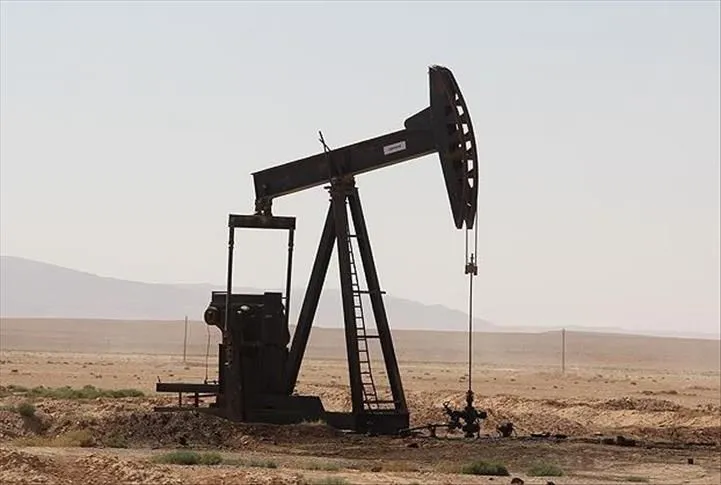
South Sudan is looking to expand oil exploration through seismic surveys and improved geological data as it seeks to identify new petroleum reserves and increase production.
The country has 14 exploration blocks available to investors, while much of its frontier acreage remains underexplored, creating opportunities for geophysical surveying, subsurface imaging and digital interpretation technologies.
The upcoming South Sudan Oil & Power (SSOP) conference, scheduled for November 24–25 in Juba, is expected to bring together industry stakeholders to discuss exploration opportunities, technical solutions and investment partnerships.
The conference will focus on how improved seismic data can help reduce geological uncertainty, identify potential hydrocarbon deposits and prepare prospects for drilling.
Seismic Data Key to Exploration
South Sudan produces oil through three operating consortia, primarily in the Melut and Muglad basins. However, up to 70 per cent of the country’s territory remains underexplored, according to the conference organisers.
The country’s geological setting, which includes extensions of the Cretaceous rift basin system, offers opportunities for further exploration, particularly in areas with limited subsurface data.
Two-dimensional (2D) seismic surveys could help map geological structures and identify potential hydrocarbon traps across underexplored blocks. More detailed three-dimensional (3D) surveys could then help operators assess individual prospects, refine drilling locations and evaluate geological risks before committing funds to exploration wells.
Reprocessing existing seismic data could also support exploration by improving the quality of older geological information.
According to the Ministry of Petroleum, available exploration data largely comprise legacy regional gravity and magnetic surveys, rather than extensive 2D or 3D seismic coverage.
Modern processing methods, including advanced migration, noise reduction and velocity modelling, could improve subsurface images and help identify geological features that were difficult to interpret using older techniques.
Survey Plans Advance in Block B2
Recent activities in Block B2 indicate efforts to improve geological understanding of the country’s underexplored areas.
The Strategic Fuel Fund, which later merged into the South African National Petroleum Company (SANPC), launched a geophysical survey campaign with South Sudan’s national oil company, Nilepet, in 2023.
By March 2024, SANPC had completed an initial aerial geophysical survey covering approximately 47,000 square kilometres, according to information provided in the conference material.
In October 2026, SANPC issued a tender for integrated reconnaissance in Block B2, ahead of a planned 2D seismic survey in the Jonglei Sub-Basin.
The planned work is intended to improve understanding of the area’s geology and help identify potential exploration prospects.
Production Targets and Investment Opportunities
South Sudan’s Ministry of Petroleum puts national oil output at approximately 170,000 barrels per day, with the government targeting 230,000 barrels per day in the near term and 450,000 barrels per day over the longer term.
Achieving those targets will depend on several factors, including exploration success, investment, infrastructure development, operational improvements and efforts to enhance recovery from existing fields.
New exploration could help replenish reserves and sustain production over time, while expanded seismic coverage may create opportunities for international geophysical and oilfield service companies.
SSOP 2026 to Bring Industry Stakeholders Together
The SSOP 2026 conference will provide a platform for oil companies, investors, service providers and government representatives to discuss the technologies, financing and partnerships needed to advance exploration.
For geophysical companies, the event offers an opportunity to engage with prospective partners on new data acquisition, reprocessing and subsurface evaluation.
Operators and investors will also be able to discuss available acreage and potential exploration strategies as South Sudan seeks to translate its petroleum resources into additional production.