
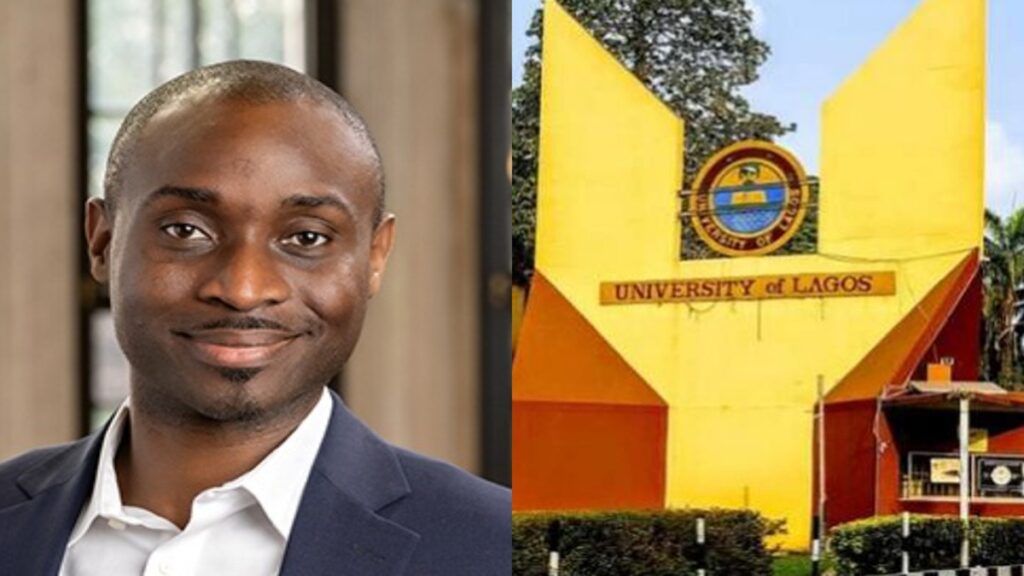
The United States Mission’s announcement welcoming Yale University professor Dr. Cajetan Iheka to Nigeria has drawn attention to one of the country’s most accomplished academics on the global stage.
Iheka, who has Nigerian roots, has begun a 10-month Fulbright appointment at the University of Lagos (UNILAG), where he will mentor lecturers and postgraduate students, support curriculum development and strengthen research and academic publishing.
Beyond his new role in Nigeria, the award-winning scholar is internationally recognised for his groundbreaking work on African literature, environmental humanities and postcolonial studies, as well as his leadership at Yale University.
Here are things to know about Dr. Cajetan Iheka
1. He is a professor at Yale University
Dr. Cajetan Iheka is a Professor of English at Yale University, where he teaches African literature, postcolonial studies, ecocriticism, ecomedia and world literatures.
2. He has Nigerian roots
Iheka is of Nigerian heritage. He completed his early education and attended university in Nigeria before moving to the United States for postgraduate studies.
3. He earned his PhD in the United States
He obtained his doctorate from Michigan State University after relocating to the United States to further his academic career.
4. He previously taught at the University of Alabama
Before joining Yale, Iheka joined the Department of English at the University of Alabama in 2015, where he taught African and Caribbean literatures, film, postcolonial studies and ecocriticism.
5. He holds several leadership positions at Yale
Beyond teaching, Iheka serves as Director of the Whitney Humanities Center, Chair of the Council on African Studies, Head of the Yale Africa Initiative and Editor-in-Chief of the African Studies Review.
6. He is serving at UNILAG under the Fulbright Programme
On August 20, Iheka began a 10-month Fulbright appointment at the University of Lagos (UNILAG), where he will contribute to teaching, research and postgraduate education.
7. He will mentor lecturers and postgraduate students
During his time at UNILAG, he will lead seminars and workshops for early-career faculty and postgraduate students, help redesign graduate curricula, and mentor academics in teaching and scholarly publishing.
8. He is an internationally recognised scholar of African literature
His academic research focuses on African and Caribbean literatures, ecocriticism, ecomedia, postcolonial studies and Black world literature.
9. He has written award-winning books
His first book, Naturalizing Africa: Ecological Violence, Agency, and Postcolonial Resistance in African Literature (2018), won the 2019 Ecocritical Book Award and the 2020 African Literature Association First Book Prize.
10. His second book received multiple international honours
His second monograph, African Ecomedia: Network Forms, Planetary Politics (2021), won six major awards, including the 2022 African Studies Association Best Book Prize and the Association for the Study of Literature and Environment (ASLE) Ecocritical Book Award.
11. He is the only scholar to achieve a unique feat
Iheka is the only scholar to have won the ASLE Ecocritical Book Award more than once, highlighting his significant contributions to environmental humanities.
Read Also: Tinubu appoints Akinfeleye, Obih, others to varsities’ governing councils
12. He has edited several influential academic publications
In addition to writing books, Iheka has edited and co-edited several scholarly works, including Teaching Postcolonial Environmental Literature and Media, African Migration Narratives: Politics, Race, and Space, Environmental Transformations, and Intellectual Traditions of African Literature, 1960–2015.
13. Another major book is on the way
His forthcoming monograph, Horizontal Comparison: Africa, the Caribbean, and the Making of Black World Literature, is scheduled for publication by the University of Chicago Press in Fall 2026.
14. He has received prestigious academic recognition
His article, “Colonial Trauma in Oyono’s Houseboy and Condé’s Crossing the Mangrove,” won the African Literature Association’s Best Article Award for outstanding scholarship published in a major peer-reviewed journal.
15. His work focuses on environmental justice in Africa
Much of Iheka’s research examines how African literature addresses environmental degradation, climate change and the effects of oil exploration. His scholarship compares responses to environmental disasters in Africa and elsewhere, advocating greater attention to ecological justice across the continent.