

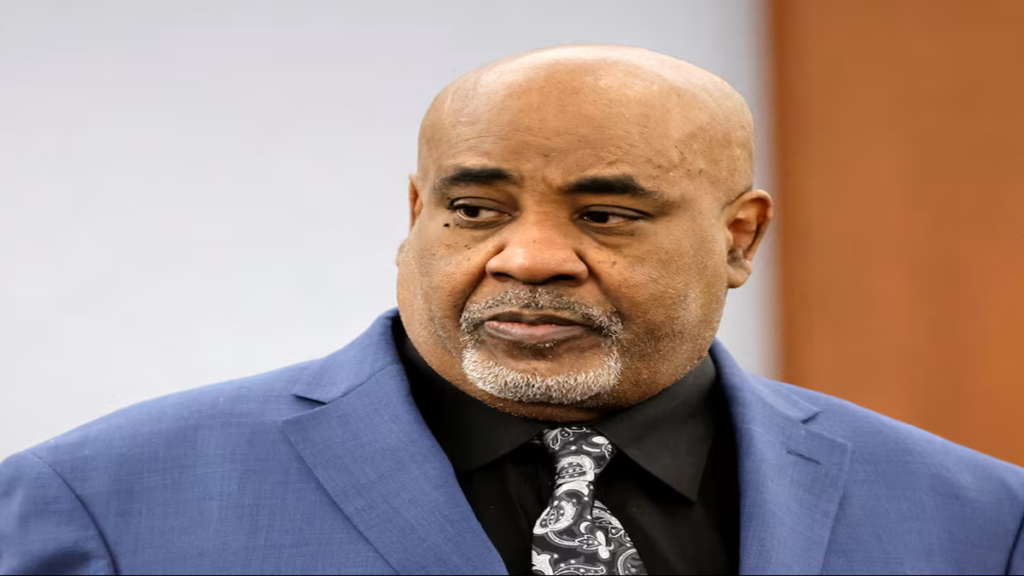
Duane “Keffe D” Davis, a former Los Angeles gang member, has been found guilty of the 1996 murder of iconic rapper Tupac Shakur, bringing an end to one of the most high-profile cold cases in American music history.
A Las Vegas jury on Monday convicted the 63-year-old of first-degree murder with the use of a deadly weapon, nearly 30 years after Shakur was fatally shot.
Announcing the verdict, the jury foreperson told the court: “Count one, murder with use of a deadly weapon, guilty of first-degree murder with use of a deadly weapon.”
Davis, who now faces a possible sentence of life imprisonment without parole, told Judge Carli Kierny after the verdict that he intends to appeal the conviction.
Prosecutors argued that Davis, a former leader of the South Side Compton Crips, orchestrated the September 7, 1996, shooting after his nephew was allegedly assaulted by members of Shakur’s entourage during an altercation at a Las Vegas casino.
During closing arguments, prosecutor Binu Palal told jurors: “Duane Davis, in the culture of gangs, could not let that stand. So what did he do? He acquired a firearm, got his group together, and went hunting for Mr Shakur.”
According to the prosecution, Shakur was shot about two hours after the casino confrontation while travelling in a BMW following a Mike Tyson heavyweight boxing match in Las Vegas. Investigators said a white Cadillac pulled alongside the vehicle at a traffic light, where the gunman opened fire.
Prosecutors alleged that Davis handed the firearm to a passenger in the back seat of the Cadillac and instructed the individual to shoot Shakur, who died six days later from his injuries.
Davis is the only surviving occupant of the Cadillac allegedly involved in the attack. Death Row Records co-founder Marion “Suge” Knight, who was driving the BMW, was wounded in the shooting.
The killing of Shakur, widely known by his stage name 2Pac, remained unsolved for decades and became one of the most discussed cold cases in the United States. Davis is the only person charged in connection with the rapper’s death.
He is scheduled to be sentenced on October 13.
Read Also: DJ OP Dot marks career milestones with hit songs, multiple awards
The case gained renewed momentum after the publication of Davis’s 2019 memoir, Compton Street Legend, in which he discussed his alleged role in the killing. Over the years, Davis also made several statements about the case in interviews with law enforcement and media organisations.
However, he later denied responsibility and pleaded not guilty to the murder charge.
As part of the prosecution’s closing arguments, Palal played video clips of Davis’s alleged confessions.
Defence attorney Michael Sanft dismissed those statements as fabricated, telling the jury: “You’re reading a book that is fiction and not fact. But the state wants you to believe that this is somehow a confession, that he was there and present at the time of the shooting.”
Sanft argued that prosecutors had no evidence linking Davis to the murder beyond his own statements and unsuccessfully sought to block both the memoir and comments Davis made during a 2008 police interview from being admitted as evidence.
Shakur, who was 25 when he died, was one of hip-hop’s most influential artists and a central figure in the East Coast-West Coast rap rivalry of the 1990s. Best known for hit songs including California Love and All Eyez on Me, the Harlem-born rapper became synonymous with the West Coast hip-hop scene after signing with Los Angeles-based Death Row Records.