

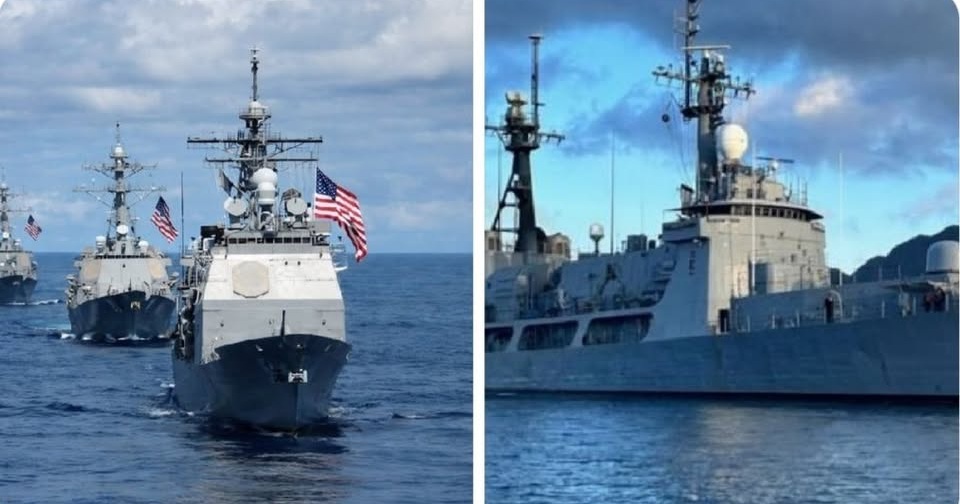
The United States has deployed more than 15 warships to enforce a counter-blockade of the Strait of Hormuz, prompting two China-linked oil tankers to abruptly reverse course amid rising tensions.
According to CBS News and other international outlets, the vessels changed direction shortly after U.S. forces began enforcing the blockade late on the 13th (Korean time), following the breakdown of peace negotiations in the region.
Citing ship-tracking service MarineTraffic, CBS News reported that the Malawian-flagged tanker Rich Starry, which was headed for China, turned back roughly 20 minutes after the blockade commenced. Another vessel, Ostria, a Chinese-affiliated tanker sailing under the Botswana flag, also reversed course near the entrance of the strait.
Reports from Reuters indicated that both tankers had departed from the port of Sharjah in the United Arab Emirates and were en route to China before retreating.
Analysts say the vessels are now caught in a difficult position, unable to proceed without risking detention by U.S. forces or potential confrontation involving Iran.
Military activity in the strategic waterway has intensified in recent days. Since the 11th, U.S. Aegis destroyers, including the USS Frank E. Petersen and the USS Michael Murphy, have entered the strait. These advanced warships are equipped to intercept ballistic missiles and counter threats from air, sea, and underwater.
Earlier, U.S. President Donald Trump warned that any Iranian high-speed vessels approaching the blockade zone would be destroyed.
“We will use the same lethal systems at sea against drug traffickers,” Trump said in a post on Truth Social.
Despite the heightened military presence, there have been no reported armed clashes between U.S. and Iranian forces in the strait. However, global shipping companies are said to be exercising caution, with many reluctant to transit the area following U.S. warnings.