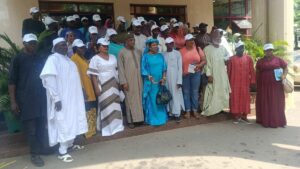


Nigeria Election Data Observatory (NEDO), comprising five civil society organisations says it will deploy more than 4,000 observers for the 2027 General Elections through the networks of its member organisations.
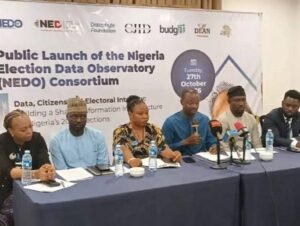
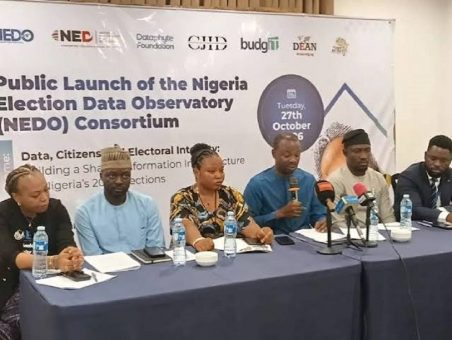
Oluseyi Olufemi, Country Director, Dataphyte Foundation, made this known on Tuesday in Abuja at the unveiling of NEDO and its civic technology App ahead of the 2027 elections.
The consortium, comprised Dataphyte Foundation, YIAGA Africa, BudgIT Foundation, the Centre for Journalism Innovation and Development (CJID) and the Development of Educational Action Network (DEAN) Initiative,
Olufemi said the observers to be deployed across the country would provide real-time information on electoral administration, incidents, voting processes, collation and election results across different locations and stages of the electoral process.
This, he said, was through the use of the NEDO Civic App which would enable observers to document election administration, incidents, voting, collation and results for the consortium’s shared evidence repository.
According to him, during the elections, field observers’ information will feed into the shared NEDO platform for consolidation, cross-checking and analysis alongside results published by the Independent National Electoral Commission (INEC) for public communication.
The News Agency of Nigeria (NAN) reports that NEDO is a first-of-its-kind shared election observation, data aggregation and information-sharing initiative .
It was developed by Dataphyte Foundation, the secretariat for the NEDO initiative to address fragmentation in election observation, data collection, research and reporting.
This is by creating a shared system for collecting, exchanging, analysing, verifying and distributing electoral information through Application Programming Interfaces (APIs) and a simpler data-sharing system.
“By connecting field observations, official election results and independent media networks, NEDO will strengthen the capacity of journalists and civil society organisations to report on electoral developments using credible and verifiable evidence,” he said.
He said the consortium would also use Artificial Intelligence (AI)-powered Optical Character Recognition (OCR) technology to convert images of election result sheets obtained from the INEC Result Viewing Portal (IReV) into machine-readable data.
“This allows us to organise, analyse, and distribute electoral information for use on interactive election-result platforms developed by consortium partners, including Dataphyte Foundation and BudgIT Foundation,” he said.
Olufemi said NEDO was crucial amid rising AI-generated misinformation, deepfakes, political intimidation and a changing political landscape that posed challenges to electoral information integrity.
“The 2023 General Elections brought these limitations into sharper focus.
“The challenges surrounding the INEC IReV, particularly during the transmission and publication of election results called for the need for an independent, coordinated civic infrastructure,” he said
He cited YIAGA Africa’s September 2026 National Voting Intentions Survey, which reported that only 34 per cent of respondents expressed confidence in INEC’s ability to conduct credible elections.
NEDO, he said, would strengthen the ability of citizens, journalists, researchers, electoral stakeholders and civil society organisations to examine electoral information and make evidence-based assessments.
He added that the consortium would publish a post-election report and make appropriate datasets available for research, advocacy and electoral reform
He said pre-election surveys and situation assessments led by DEAN Initiative would examine electoral preparedness, citizens’ perceptions, public confidence, emerging risks and the broader conditions shaping the 2027 elections.
He said the findings would inform a National Election Readiness Report, regional briefs and periodic situation reports ahead of the elections.
Olufemi said that after the elections, the consortium would further analyse the evidence collected, compare relevant observations with official results, publish a post-election report and make appropriate datasets available for research, advocacy and electoral reform.
According to him, the unveiling of NEDO is an important step in building a coordinated civil society response to the information and accountability challenges of Nigeria’s electoral process.
He urged the media, CSOs, researchers, technology partners and other relevant stakeholders to engage with the initiative and help strengthen Nigeria’s electoral information ecosystem.
(NAN)