

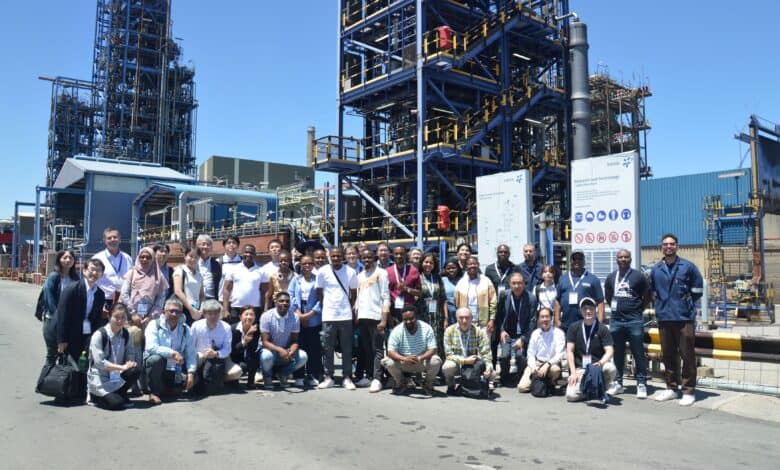
South Africa is seeking to strengthen its role in global clean energy research and innovation through its participation in the 8th Research and Development (RD20) Conference in Pretoria.
The conference, which held from October 19 to 23, 2026, at the Council for Scientific and Industrial Research (CSIR) International Convention Centre, was organised by the CSIR in partnership with Japan’s National Institute of Advanced Industrial Science and Technology (AIST).
Held under the theme, “Accelerating Clean Energy Innovation – From Africa to the World,” the event brought together research institutions and other stakeholders to promote international cooperation, exchange knowledge and advance technologies supporting the transition to carbon neutrality.
South Africa’s Department of Science, Technology and Innovation (DSTI) participated in the conference as part of efforts to promote research, technological development, skills acquisition and international partnerships in the country’s clean energy sector.
Launched in 2019, RD20 is an international research and development initiative involving leading research institutions in G20 countries and regions. It provides a platform for collaboration among governments, universities, research institutions and industry stakeholders to advance clean energy technologies.
Speaking on the department’s priorities, Mandy Mlilo, Director for Hydrogen and Energy at the DSTI, said its activities were guided by the 2019 White Paper on Science, Technology and Innovation, which provides the policy framework for advancing research and technological development in South Africa.
“Inclusivity, transformation and partnerships are at the core of our approach to strategic partnerships. We believe that strategic partnerships enable us to leverage our resources as a collective. Platforms such as RD20 are particularly important to us as government to communicate priorities and showcase capabilities,” Mlilo said.
She said the conference provided an opportunity for South Africa to showcase its research, development and innovation capabilities, strengthen international partnerships and contribute African perspectives to global efforts to achieve carbon neutrality.
Mlilo added that the Science, Technology and Innovation Decadal Plan (2022–2032) provides a long-term framework for using research and technological development to address the country’s development priorities.
“Our responsibility is to ensure that science, technology and innovation contribute to the future of skills and education, while mobilising resources and strengthening partnerships to advance energy innovation. Through these efforts, we aim to ensure that science and innovation respond to the country’s development needs and support a sustainable, inclusive and climate-resilient future,” she said.
Through its Hydrogen and Energy Chief Directorate, the DSTI supports four energy research, development and innovation programmes: Photovoltaic Solar and Wind Technology, Energy Storage, Hydrogen South Africa (HySA) and Coal-to-X.
The programmes focus on renewable energy technologies, energy storage, hydrogen development and the conversion of coal-derived materials into higher-value products, including chemicals and fuels.
According to the department, the initiatives are designed to strengthen local research capacity, advance technological innovation and translate research findings into practical applications that support South Africa’s energy transition and industrial development.
CSIR Chief Executive Officer, Dr Thulani Dlamini, described RD20 as an important platform for connecting research institutions and promoting international cooperation.
“RD20 is about connecting research institutions, exchanging knowledge and best practices, and creating opportunities for international research collaboration in support of carbon neutrality. This week’s programme is a practical expression of that purpose, with a focus on energy access, critical minerals, synthetic fuels, artificial intelligence for energy, hydrogen and fuel technologies, and international collaboration,” Dlamini said.
The participation of DSTI implementing agencies in the conference exhibition also provided an opportunity to showcase publicly funded research, technologies and innovation capabilities to international research institutions, industry representatives and other stakeholders.