

Brazilian President Luiz Inácio Lula da Silva has won re-election for a fourth term after defeating far-right challenger Flávio Bolsonaro in a closely contested presidential runoff.
With all votes counted, Lula secured 51.79 per cent of the valid votes, or 64,256,232 ballots, while Bolsonaro received 48.21 per cent, or 59,826,041 votes. The margin was about 4.4 million votes.
The result marked a major comeback for Lula, who finished behind Bolsonaro in the first round of voting earlier in October. The victory also makes Lula the first Brazilian president to win a fourth non-consecutive term.
However, Bolsonaro refused to concede defeat after the result was confirmed, saying it was “impossible to concede the election result” and indicating that his legal team would seek to have the election annulled.
The defeated candidate cited a decision by Supreme Court Justice Cristiano Zanin to extend voting hours by two hours as the basis for his challenge. Bolsonaro described the decision as “not normal” and “unacceptable”, arguing that it amounted to changing the rules during the election.
The extension followed reports of transportation problems and was intended to allow voters who had experienced difficulties reaching polling stations to cast their ballots.
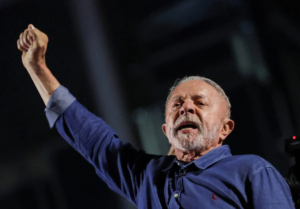
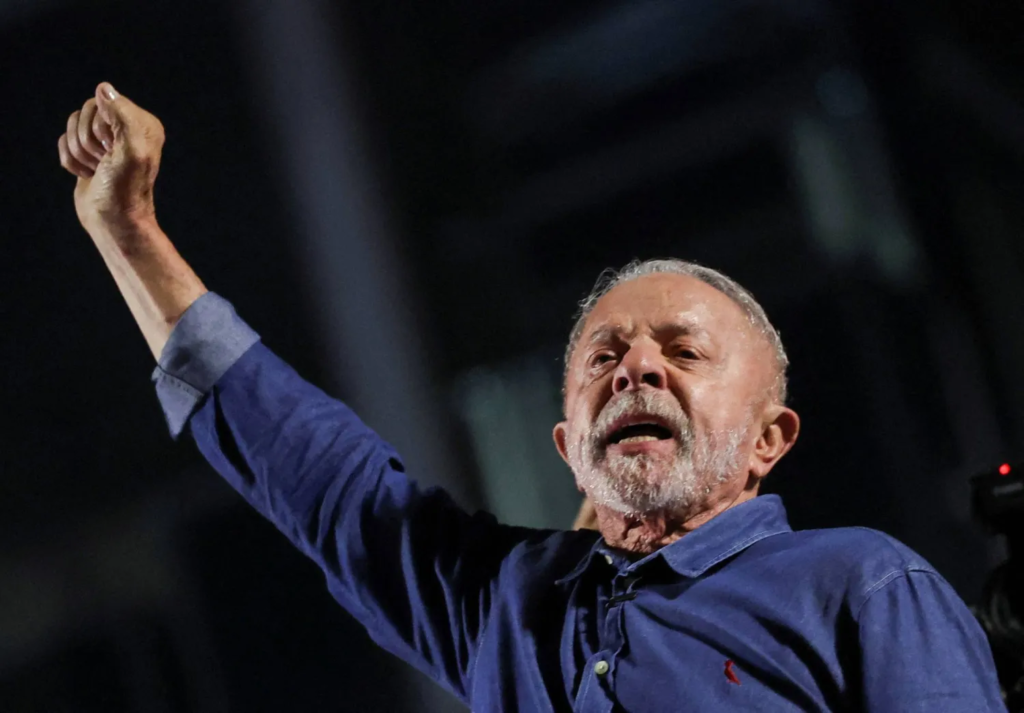
Lula, addressing supporters in São Paulo after his victory was confirmed, said the result represented a rejection of what he described as denialism.
“We are going to change the way that this country is governed … This election was a defeat for denialism,” he said.
Lula also thanked Brazilian voters, saying, “I want to thank God and to thank you, Brazilian men and women of this country … it was democracy that made this happen.”
Alexandre Padilha, Lula’s health minister, described the result as a major victory for the Brazilian people and said voters had considered issues including the environment, healthcare, education and the constitution when casting their ballots.
“It’s a massive victory – not just for Brazil. It’s also an important signal to the rest of Latin America and to the world,” Padilha said.
Lula’s victory came amid a decline in voter abstention compared with the first round. Abstention fell from 21.08 per cent in the first round to about 19.22 per cent in the runoff.
The president, who turns 81 on Tuesday, has had a long political career dating back to his emergence as a trade union leader in São Paulo’s industrial suburbs in the late 1970s.
A former factory worker who grew up in poverty, Lula unsuccessfully contested the presidency in 1989, 1994 and 1998 before winning the 2002 election and becoming Brazil’s first elected working-class president.
He served the constitutionally permitted two consecutive terms before returning to power after defeating Jair Bolsonaro in the 2022 presidential election.
His latest victory is a setback for the Bolsonaro family. Jair Bolsonaro, Flávio’s father and a former president, is serving a 27-year sentence after being convicted over a plot to overturn his 2022 election defeat.
Flávio Bolsonaro’s defeat also represents a setback for the wider right-wing political movement in Brazil and its international allies.
The election result triggered celebrations in major Brazilian cities, including São Paulo and Rio de Janeiro, where large crowds gathered after Lula was declared the winner.
Lula supporters had staged large rallies in the final days of the campaign, including gatherings at Rio de Janeiro’s Copacabana beach and São Paulo’s Paulista Avenue.
The campaign was also marked by accusations from Lula supporters that pro-Bolsonaro politicians had attempted to disrupt public transportation in areas considered favourable to Lula. The allegations were linked to concerns that transport problems could prevent some voters from reaching polling stations.
The election was one of Brazil’s closest since the return to democracy. Lula’s 3.58 percentage-point margin was significantly narrower than several previous presidential contests.
Following the result, Mexican President Claudia Sheinbaum congratulated Lula, writing, “Long live democracy, the people of Brazil won. Congratulations, President Lula!”
Paraguayan President Santiago Peña also congratulated the Brazilian people on what he described as a democratic process.
Lula’s fourth term is scheduled to begin in January 2027, with the president facing challenges including economic pressures, political polarisation and tensions between his administration and Brazil’s conservative opposition.