
The Egyptian government is failing to meet constitutional and international benchmarks for education and health care, Human Rights Watch said on Thursday, warning that inadequate funding is undermining citizens’ access to essential services.
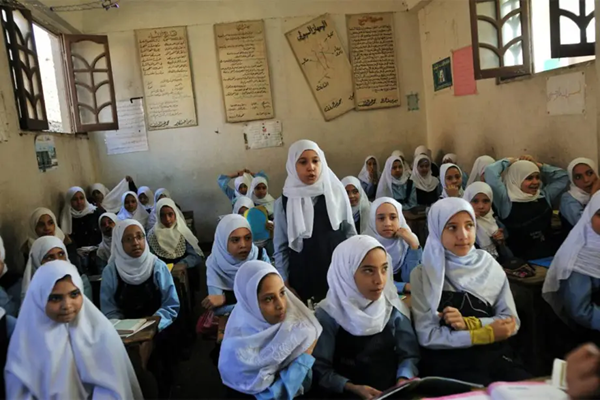
According to the rights group, Egypt is falling short of providing free primary education and quality health care accessible to all, with chronic underfunding contributing to shortages of classrooms, teachers, doctors, and nurses. Families are increasingly forced to cover school fees and medical costs out of pocket, while health workers reportedly pay for essential hospital supplies themselves.
“The Egyptian government has failed for years to adequately ensure the rights of education and health for everyone, as demonstrated by its chronic underfunding,” said Amr Magdi, senior Middle East and North Africa researcher at Human Rights Watch. “The lack of adequate funding for health and education demonstrates the government’s deep indifference toward its citizens’ rights.”
Human Rights Watch analysis shows that education spending has decreased over the past five years both in inflation-adjusted terms and as a percentage of GDP and government expenditure. For the 2025-26 fiscal year, the education budget is 315 billion Egyptian pounds (US$6.3 billion), equivalent to 1.5 percent of GDP and 4.7 percent of government expenditure—the lowest share since at least 2019.
Egypt’s 2014 Constitution requires a minimum of 6 percent of GDP on education, while international standards recommend 4–6 percent of GDP and 15–20 percent of public expenditure. Human Rights Watch noted that Egypt’s current allocation places it in the 12th percentile of lower middle-income countries, below 88 percent of comparable nations.
The organization also highlighted shortages of classrooms and teachers, as well as the cost burden on families. In 2019, households spent an average of 10.4 percent of income on school-related expenses, including fees, materials, and private tutoring.
The 2025-26 health budget of 245 billion pounds (US$4.9 billion) represents just 1.1 percent of GDP and 3.6 percent of government expenditure, below the 3 percent constitutional minimum. Inflation-adjusted spending has remained largely flat, and per-person funding has not increased over the past three years.
Human Rights Watch said the health system faces severe shortages, with 11,536 doctors resigning from the public sector between 2019 and March 2022 and around 7,000 leaving the country in 2023. Egypt’s doctor-to-population ratio was 6.71 per 10,000 people in 2020, below the WHO minimum recommendation of 10. There is also a shortage of 75,000 nurses, according to the Nursing Syndicate.
Most health care costs—over 57 percent in 2023—are paid out of pocket, creating inequalities in access. The 2018 Universal Health Insurance Law aims for full coverage by 2030, but Human Rights Watch said funding remains insufficient.
Egypt is a party to international agreements including the International Covenant on Economic, Social and Cultural Rights, the African Charter on Human and Peoples’ Rights, and the Convention on the Rights of the Child, which require governments to take deliberate steps to realize citizens’ rights to education and health.
Human Rights Watch urged the government to guarantee free primary education and ensure high-quality health care is accessible to all, warning that reductions in spending on these sectors are presumptively a violation of these obligations unless fully justified.
“By systematically failing to meet constitutional spending requirements for education and health for many years, the government is neglecting the very sectors that would enable citizens to live with dignity and for the economy to thrive,” Magdi said. “This years-long failure shows that the government’s talk of social and economic rights is essentially lip service.”
Human Rights Watch contacted Egypt’s ministries of education and health on December 22, 2025, but did not receive a response.