
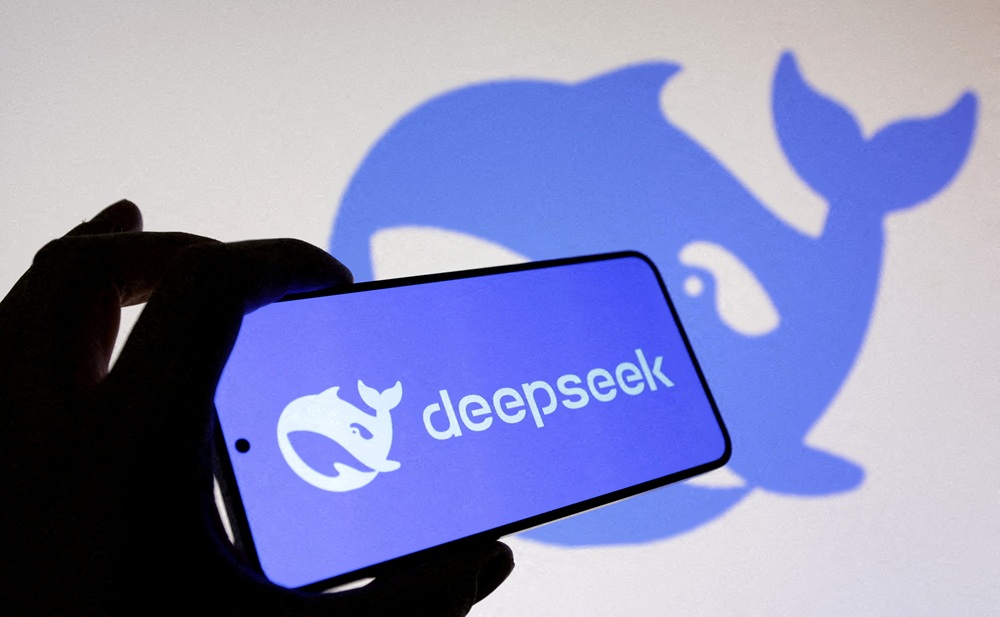
Chinese artificial intelligence startup DeepSeek has released a new AI model, more than a year after shaking the global tech space with its low-cost reasoning system.
The company announced the latest model, DeepSeek-V4, on Friday, highlighting its significantly reduced computing and memory costs alongside improved performance.
Based in Hangzhou, DeepSeek first gained global attention in January 2025 with its R1 reasoning model, which powered a chatbot that rivalled leading US systems at a fraction of the cost.
Advanced capabilities
According to the company, DeepSeek-V4 features an “ultra-long” context window of up to one million words, allowing it to process far larger volumes of information compared to previous models.
The firm said the model delivers strong performance in reasoning, world knowledge, and agent-based tasks, positioning it among leading systems in both domestic and open-source AI development.
A preview version of the model has been made available as open source.
Experts say the launch could mark a turning point for the industry.
Zhang Yi, founder of research firm iiMedia, described the release as an “inflection point” in AI development.
“This addresses long-standing issues of slower performance and high costs associated with long context lengths,” he said, noting that it could make advanced AI tools more accessible beyond research environments.
Two model variants
DeepSeek-V4 is available in two versions:
V4-Pro, with 1.6 trillion parameters
V4-Flash, with 284 billion parameters, designed as a more efficient and cost-effective option
The models are also optimised for AI agent tools such as Claude Code, OpenClaw, OpenCode, and CodeBuddy.
DeepSeek said its Pro version performs strongly on global benchmarks, trailing only top-tier closed-source systems such as Gemini-Pro-3.1 in some areas.
Growing US-China AI rivalry
The release comes amid intensifying competition between China and the United States in the artificial intelligence sector.
Last year’s emergence of DeepSeek triggered what analysts described as a “DeepSeek shock,” prompting market reactions and raising questions about US dominance in AI development. The company’s earlier chatbot was widely compared to systems like ChatGPT, but built with significantly lower computing resources.
However, concerns have also been raised over data privacy and censorship, particularly after the chatbot avoided responding to sensitive topics such as the 1989 Tiananmen Square crackdown.
In China, DeepSeek’s tools have seen widespread adoption across sectors including healthcare, finance, and local government, partly due to its open-source approach—contrasting with proprietary systems developed by Western firms like OpenAI.
Meanwhile, US officials have accused Chinese entities of attempting to acquire American AI technology through large-scale “distillation” practices, a method used to create smaller, more efficient models.
The announcement also comes as global tech companies, including Meta and Microsoft, ramp up investments in artificial intelligence while seeking cost efficiencies within their operations.