
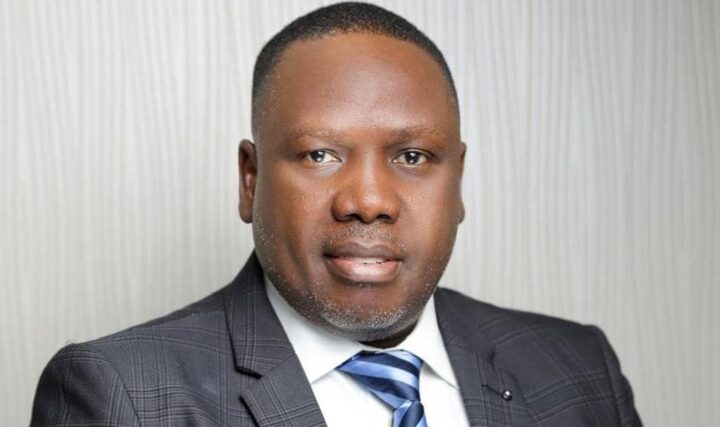
Daniel Bwala, Special Adviser to President Bola Tinubu on Policy Communication, has accused former Vice-President Atiku Abubakar of exploiting economic hardship for political support, while claiming that former Anambra State Governor Peter Obi relies heavily on social media to sustain his popularity.
Bwala said large crowds at campaign rallies and online engagement were not reliable indicators of a candidate’s electoral strength, arguing that political success depended on grassroots mobilisation and actual votes.
He made the remarks during an appearance on the Naija Unfiltered Podcast, while responding to questions about whether President Tinubu was concerned by Atiku’s growing support in the North ahead of the January 16 presidential election.
Bwala dismissed the crowds at Atiku’s campaign rallies as insufficient evidence of widespread voter support, saying the former vice-president had a history of attracting large audiences without translating them into electoral victories.
“I am an advocate from day one that numbers in rally is not a proof of popularity. I even cautioned people from our own side that if we go to a place and everywhere is filled, let us not project it as a strength, because we dey on the street we know how people are gathered in campaigns and Atiku is a master in gathering people when it comes to campaign,” he said.
Recalling Atiku’s contest against former President Olusegun Obasanjo, Bwala said the former vice-president attracted large crowds during the campaign, creating the impression that he could defeat the incumbent.
“I remember the first time he ran on the platform provided by Asiwaju Bola Ahmed Tinubu against Obasanjo. It was within few days to election that he was sort of getting some oxygen. If you see everywhere he goes, rave, rave, rave. Everybody believed he was going to defeat Obasanjo. At the end of the day, what is it?” he said.
Bwala argued that political strength should be measured by a candidate’s ability to mobilise voters at the grassroots rather than the number of people attending rallies.
He also questioned Atiku’s political structure in the North, pointing out that the party he had joined did not have a sitting governor.
“But even with the crowd, we have pulled more crowds than him. So what is Atiku Tsunami? What is his structure? Because right now the party he has moved to does not have a governor,” he said.
The presidential aide also criticised Obi’s political strategy, alleging that his popularity was largely driven by social media activities rather than established political structures.
Bwala claimed that Obi had lost the support of churches and political allies who backed his 2023 presidential campaign.
Read Also: 2027: Obi is Nigeria’s hope – NDC National Chairman
“It’s just like Peter Obi. As I talked about Atiku, he uses social media activities to gauge his election. They are nowhere in Nigeria. In 2023, the church was his structure. They are not with him. Tell me the church he has gone to lately. He has been disinvited,” he said.
He further alleged that some of Obi’s supporters and political allies had withdrawn their backing, leaving social media influencers and content creators to sustain online conversations about the former governor.
According to Bwala, the online attention surrounding Obi was driven partly by content creators seeking engagement and revenue rather than necessarily reflecting his electoral support.
“And if you are looking for revenue, you are looking for engagement, believe me, I’m telling you, the best person to pick is Peter Obi, because he’s a mixture of everything that creates engagement for you, so the guys are not losing on social media. So, Peter will lose election, but they will gain,” Bwala said.
Reacting to videos circulating online showing alleged hired rally attendees demanding payment and engaging in fights after campaign events, Bwala maintained that rally attendance should not be used as a measure of political popularity.
He said elections were determined by registered voters who were accredited, cast their ballots and had their votes counted and announced, rather than by social media trends or crowd sizes.
“I have always been an advocate of not using crowd because if you are using crowd, then that should be the new model for determining WHO won the election. But election are won when registered voters, accredited voters, cast their vote, and the vote is counted, and the vote is transmitted, and the vote is collected, and it is then announced. That is the way by which people win election, not the popularity because of the management of algorithm,” he said.
Bwala concluded by describing Atiku’s and Obi’s political approaches as different, accusing the former of relying on economic hardship and the latter on online mobilisation.
“What they are doing is that Peter Obi runs the social media algorithm, Atiku runs the weaponization of poverty’s algorithm,” he said.