
YouTube, Woof Studios launch ‘PluggedIn’ to connect creators, brands

Nigeria’s top YouTube creators and leading brands Today came together to explore a new frontier of collaboration in marketing through PluggedIn, a new initiative by Woof Studios and YouTube. The initiative is designed to move beyond transactional advertising, instead fostering deep, community-focused partnerships between creators and brands. This shift unlocks more authentic ways for brands to connect with a surging digital audience, as YouTube watch time in Nigeria grows by over 50% year-on-year and the platform now reaches over 30 million adults monthly.

The timing for these partnerships is right. Audiences, especially younger fans, are tuning into creators they trust and relate to, making them eager to be part of the conversation. For brands, this means moving beyond traditional ads and working directly with the storytellers who have captured the attention and loyalty of their communities.

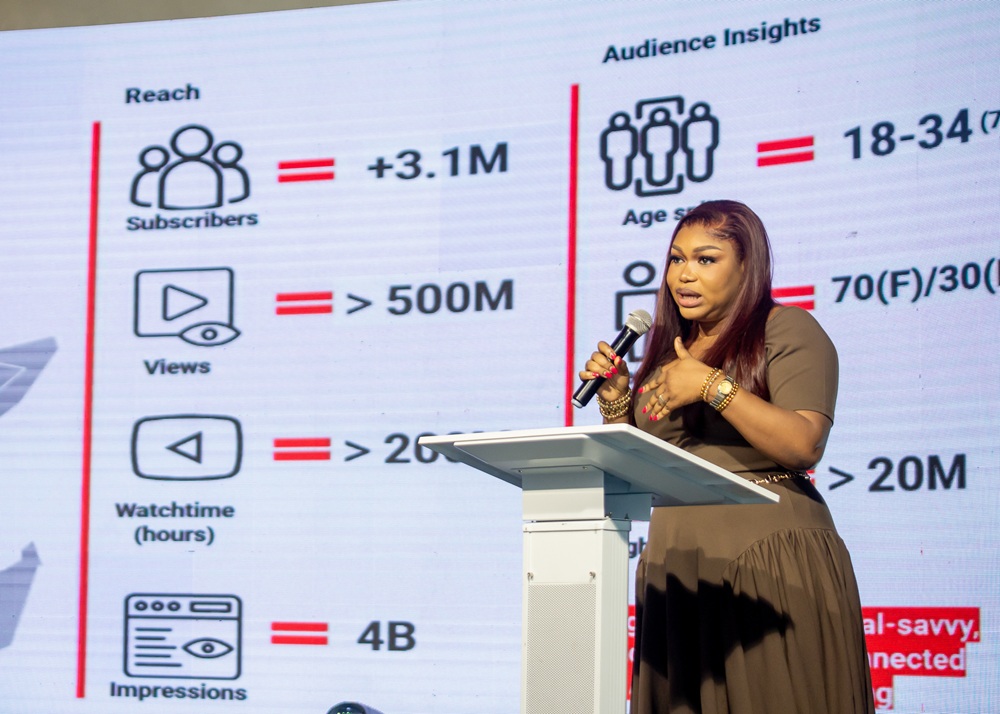
At the event, creators and brands got down to business with everything from quick pitches and one-on-one meetings to practical sessions about how to turn a great idea into a finished project. The goal is to spark collaborations that can grow from a single video into a fan-favorite series.

“My community loves food, but they also love the stories behind the food. For a long time, I’ve wanted to create bigger projects, like a travel cooking series or a professionally produced show. Partnerships with brands make that possible,” said Ifeyinwa Mogekwu, creator of Ify’s Kitchen. “PluggedIn is helping us start the right conversations. It’s about finding brands who understand that our viewers want quality content, not just a quick ad. It’s a chance to collaborate on something truly special that everyone will enjoy.”

“Nigerian creators are thinking bigger, and that’s exactly what brands want to be part of,” said Adetutu Laditan, Founder & Creative Director at Woof Studios. “Our role is to handle the business and production complexities, making it seamless for great ideas to get funded, made, and seen by millions.”


For brands, working with creators is a powerful way to connect with people. Data shows that YouTube is part of the journey for two-thirds of consumers when they discover a new brand or product, making it a key place for businesses to build a fanbase.

“The fundamental rule of marketing has changed. Consumers are in full control, and they choose to spend their time with creators they trust,” said Dammy Abodunrin, Industry Manager, Google. “For brands, this represents a key opportunity. Partnering with a creator on YouTube provides a platform for brands to become part of a community and tell their stories through voices that people genuinely listen to. At the same time, these collaborations provide creators with the resources to fund their biggest ideas and build their channels into lasting media businesses. PluggedIn was designed to foster these powerful connections, creating a true win-win for brands, creators, and their fans.”
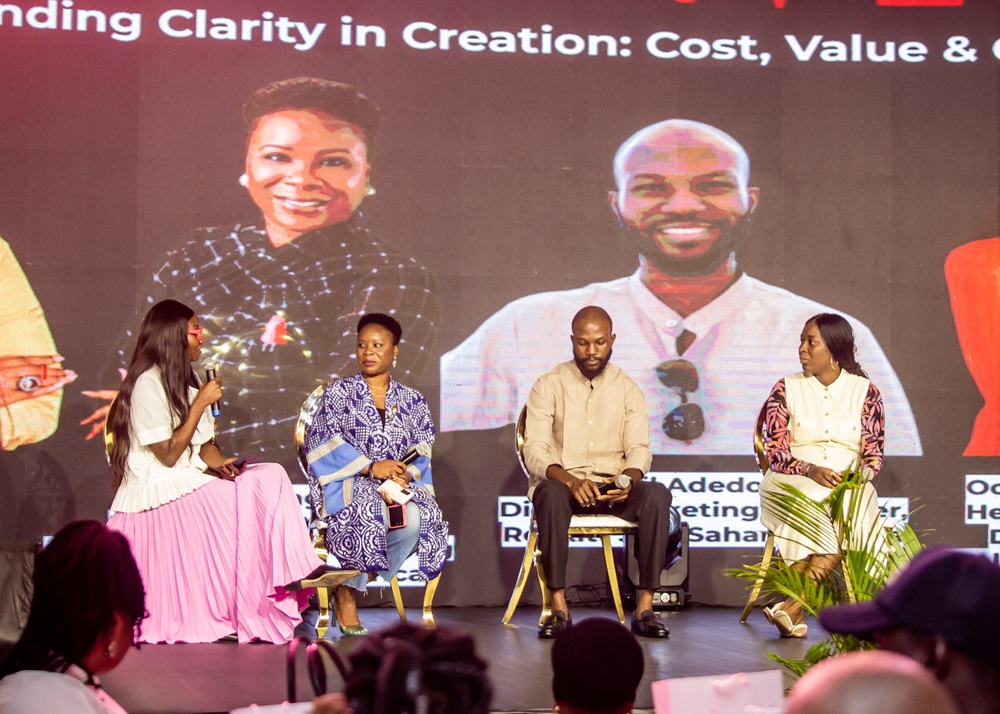
This new way of working highlights the opportunity that creators themselves see. A recent survey shows that 9 in 10 Nigerian creators agree that YouTube is a powerful platform not only to share their culture but also to build a sustainable business, signaling a robust future for community-centric marketing. 

Six strategies to grow your e-commerce business in Nigeria

Nigeria’s e-commerce landscape is evolving rapidly. From fashion and electronics to groceries and beauty products, more Nigerians are shopping online than ever before. According to DataReportal, the country had 103 million internet users as of January 2024, and online retail sales continue to grow as more people gain access to affordable smartphones and digital payment systems.

However, while opportunity is expanding, so is competition. Thousands of small businesses now sell across Instagram, WhatsApp, and local marketplaces. For many, the challenge is no longer getting online, it’s standing out and building sustainable growth.

Below are six strategies that can help e-commerce entrepreneurs in Nigeria compete more effectively, connect with customers, and scale sustainably.

1. Focus on a niche, not the crowd

The internet offers endless reach, but success often lies in narrowing your focus. Instead of trying to appeal to everyone, identify a specific audience whose needs you understand deeply—whether that’s fitness enthusiasts, new parents, or tech-savvy students.

Niche targeting allows you to tailor your message, pricing, and product experience. It also helps small businesses build loyalty and word-of-mouth credibility in markets where advertising budgets are limited.

2. Build relationships beyond social media

Social platforms are powerful but unpredictable. Algorithms change, engagement fluctuates, and visibility can vanish overnight. That’s why it’s essential to diversify how you stay connected with customers.

Email newsletters, community groups, or loyalty programs provide more direct and reliable touchpoints. Use these channels to share updates, answer questions, and offer genuine value—not just promotions. Consistent, thoughtful communication builds trust that outlasts social trends.

Read Also: Importance of CRM Analytics in making enhanced business decisions

3. Use data to understand customer behaviour

Every click, search, and abandoned cart tells a story. Tracking customer behaviour—through analytics dashboards, feedback forms, or even simple observation—can reveal why shoppers drop off and what keeps them coming back.

For example, you might discover that most users exit your site during checkout due to limited payment options. Adding mobile money or bank transfer features could increase conversions immediately. Data-driven decisions help eliminate guesswork and improve user experience.

4. Create content that answers real questions

Many Nigerian shoppers research extensively before buying online, especially from lesser-known brands. Publishing clear, helpful content—such as FAQs, size guides, or product comparisons—can bridge the trust gap.

A small skincare brand, for example, could post educational pieces on ingredients and routines, while a gadget store could share short explainers on choosing the right devices. When people find answers through your content, they are more likely to view your business as credible and dependable.

5. Explore automation and AI for efficiency

Artificial Intelligence is reshaping how small businesses operate globally—and Nigeria is no exception. From customer support chatbots to inventory management and personalized recommendations, automation can simplify repetitive work and improve decision-making.

Even basic AI tools can help analyse trends, spot buying patterns, and free up time for strategic tasks. The goal isn’t to replace human connection but to enhance it by focusing your energy where it matters most—understanding and serving your customers.

6. Build credibility through customer voices

Nigerians value peer opinions. Reviews, testimonials, and user-generated content often carry more weight than brand messaging. Encourage satisfied customers to share feedback or showcase how they use your products.

Displaying honest reviews on your website or social pages signals transparency and confidence. People are far more likely to trust a brand that others vouch for, especially in a marketplace crowded with new entrants.

Building for the long term

Sustainable e-commerce growth in Nigeria isn’t about chasing every new platform or pouring money into ads—it’s about clarity, consistency, and connection. By focusing on real customer needs, learning from data, and building trust at every step, businesses can create lasting impact in one of Africa’s most dynamic digital markets.

Impact investors foundation set to host 3rd gender impact investment summit

The Impact Investors Foundation (IIF), Nigeria’s leading platform for unlocking impact capital has announced that the third edition of its Gender Impact Investment Summit (GIIS) will be held on October 2, 2025 at the Civic Centre in Lagos, Nigeria. The annual event serves as a crucial platform where stakeholders converge to address systemic barriers that limit women’s access to finance and accelerate progress toward a more inclusive and equitable investment landscape in Nigeria

While previous summits focused on bridging the financing gap and promoting gender-inclusive investment models, this year’s summit will move beyond dialogue by introducing a comprehensive roadmap with targeted interventions for inclusive capital mobilisation. The third annual summit, with the theme “Investing in Equity: Advancing Gender-Led Solutions for Inclusive Development,” will mark a significant turning point, shifting from advocacy to tangible action.

A key highlight of the event will be the official unveiling of the ground-breaking Gender/Gender Equity and Social Inclusion (GESI) Roadmap. This strategic framework is designed to tackle the systemic barriers faced by businesses led by women, youth, and People with Disabilities (PWDs) in Nigeria, providing a clear path for various actors       to adopt more inclusive practices.

Read Also: Wema Bank to boost entrepreneurship, investment with Hackaholics 6.0

Ms. Etemore Glover, CEO of Impact Investors Foundation, stated, “This summit is about more than just talk; it’s about action. By shifting our focus from advocacy to a powerful business strategy, we’re proving that investing with a gender lens isn’t just about doing good—it’s about achieving higher returns.”

A key feature of the summit will be in-person and virtual deal rooms, which will provide a direct platform for investment-ready, women-led, and women-owned businesses to connect with capital providers. This unique opportunity will facilitate crucial partnerships and foster real-world investments by connecting entrepreneurs with impact investors and fund managers.

The GIIS welcomes a diverse audience of stakeholders, including entrepreneurs, financial institutions, enterprise support organisations, government representatives, and the media, all of whom are vital to driving meaningful change. The summit will feature panel discussions that will drive knowledge and insight sharing, breakout and networking sessions, fireside chats, and presentations from notable speakers in the financial, business, and policy sectors. Jessica Espinoza, CEO of 2X Global, a global industry body for gender lens investing will deliver the keynote address.

“Through GIIS, IIF is committed to establishing Nigeria as a leader in gender-inclusive investments, showing the world that economic prosperity and social impact can go hand-in-hand,” Ms. Glover concluded.

I take responsibility for Abuja-Kaduna train derailment, says NRC MD


The Managing Director of the Nigerian Railway Corporation (NRC), Kayode Opeifa, has taken full responsibility for the Abuja-Kaduna train derailment that occurred on Tuesday.

Opeifa, who spoke on Channels Television’s The Morning Brief on Wednesday, assured Nigerians that the ongoing investigation into the incident would be transparent.

“Let me say, beyond apologising to Nigeria, I want to say as the managing director and chief executive, I take full responsibility. And in the case of safety, there is no indifference.

“Once it happens, the chief executive must take responsibility. In this case, I am taking responsibility,” Opeifa said. 

Read Also: Tinubu celebrates NDDC boss Ogbuku at 50 ‎

The NRC boss further stressed that while the derailment should not have happened, measures were being put in place to prevent a recurrence.

“I want to assure Nigerians that an incident like this is not expected, is not prayed for, should not be happening, but where it does, it is to bring out the best in us.

“And I assure Nigerians that just as we are doing currently on the Warri-Itakpe, which he (the analyst) also mentioned, we shut down the Warri-Itakpe (route) three weeks ago.

“I ordered the shutdown for safety reasons, and if you see the level of work the men have been doing on the track, cutting it off and replacing it is to make sure things like this don’t happen,” he added.

The derailment occurred on Tuesday along the Kaduna corridor shortly after the train departed Abuja at about 11 a.m. en route to Kaduna.

Passengers described the scene as chaotic, with many scrambling to safety.

NDLEA seizes 2.318 tons of marijuana in Kwara

The National Drug Law Enforcement Agency (NDLEA), says it has intercepted and  seized 2.318 tons of cannabis in the last one week in Kwara.

The NDLEA Commander in the state, Hajia Fatima Popoola, said this at a news conference in Ilorin on Tuesday.

Popoola said that the cannabis were intercepted during two operations along Offa and Omu Aran axis of the state command at about 3:00 am and 5:30 am.

She said that four suspects arrested in connection with the seizures, concealed the drugs among sacks of saw dust.

“This is one of the biggest seizures we’ve made in a single week in recent time, and the street value of what we seized runs into at least billions of naira.

“This shows just how serious the drug use and trafficking have become in Kwara,” she said.

Popoola said that one of the suspects, a driver, was caught with 1.2 tons of cannabis, another suspect with 300kg of cannabis, while the remaining 720kg seizure was linked to two suspects.

Read Also: NDLEA arrests notorious drug kingpin in Delta

The drugs were reportedly concealed in Canter trucks and disguised as ordinary goods with sacks of saw dust to deceive NDLEA officials at the check points.

“A J5 vehicle was checked, which appeared to be empty, but we found it loaded with cannabis, and these operations took place mostly between 3:00 am and 5:30 am, when traffickers often move to avoid detection,” she said.

The commander, who noted that drugs are at the root of many criminal activities, added that, “no sane person wakes up to commit inhumane acts or violent crimes, most of the time, there is drug influence behind it.”

She said that security challenges in such places like Kaiama, Chikanda, Patigi, Edu, and Omu Aran were drug-related.

The commander said that while only two tons of drugs were seized in 2024, the command has seized over 2,000 kilograms between January and August  2025.

She attributed the feat achieved to the synergy among sister security agencies, saying that, “the NDLEA is not working alone. We are working with the police, army, civil defence, and traditional rulers.”

Gov. AbdulRahman AbdulRazaq commended the agency for the feat, adding the arrests and seizures reflected the commitment of his administeation to eliminate drug abuse in the state.

Represented by Alhaji Saadu Salahu,  the Senior Adviser/Counsellor,  AbdulRazaq said the state was working closely with the NDLEA in mobilising traditional rulers, community leaders, civil society groups, and religious institutions to create awareness on the dangers of drug abuse.

“We need to educate the younger generation on the health implications of involvement in drugs,” he said.

He urged residents of the state to be vigilant and report suspicious activities, stressing that the fight against drug trafficking requires everyone’s support.

The News Agency of Nigeria ( NAN) reports that the event was attended by the representatives of traditional rulers, military and para-military agencies.

(NAN)

Fire razes 15 houses in C’River community

No fewer than 15 houses were on Tuesday razed by fire in Agbokim Waterfall village in Etung Local Government Area of Cross River.

The News Agency of Nigeria (NAN) reports that among the affected buildings was the residence of the council’s Vice Chairman.

The fire was reportedly triggered by Premium Motor Spirit (PMS) stored in one of the houses.

An eyewitness, Mr John Agbor, said a leakage from one of the drums of PMS spilled into a nearby fire, sparking the inferno that spread through the community.

Read Also: Fire guts Fresh FM Ibadan studio

“It was hell of a fire, and the whole community was covered with fear as the fire spread and thick smoke billowed into the sky.

“The worst is that there is no fire service close, and we were all left to our fate to bring the fire under control, but by then the damage had been done,” Agbor said.

Agbor said the PMS was meant for transit to Cameroon from Agbokim.

Contacted, Director of the State Fire Service, Mr Dennis Ajom, who confirmed the incident, said he had mobilised saying officers ti the scene of incident.

Contacted, the Director of the State Fire Service, Mr Dennis Ajom, confirmed the incident, saying he had mobilised officers to the scene.

“I am aware. I directed officers from our Ikom office to move there, and I am awaiting a detailed report from them,” he stated.(NAN)

Why Nigeria refineries are failing – PENGASSAN

 The Petroleum and Natural Gas Senior Staff Association of Nigeria (PENGASSAN) has identified the reasons why the Nigeria’s state-owned refineries are failing.

The association said that the refineries are not failing because Nigerians lack the skills, but as a result of political interference which denied workers the tools, resources, and enabling environment to deliver effectively.

Mr Festus Osifo, the association’s President who stated this on Friday at the ongoing 4th PENGASSAN and Labour Summit (PEALS 2025), also identified widespread corruption and mismanagement as reasons for the failure of the refineries.

The News Agency of Nigeria (NAN) reports the three days summit holding in Abuja is themed, “Building a Resilient Oil and Gas Sector in Nigeria: Advancing HSE, ESG, Investment and Incremental Production.

Osifo said Nigeria’s energy future require more than skilled manpower and there is the urgent need for tools, policy stability, and supportive reforms to drive growth in the energy sector.

Read Also: Nigeria ranks 5th in countries with cheapest Petrol in Africa

According to him, during the COVID-19 pandemic, Nigerian workers successfully operated offshore platforms after expatriates departed.

He said the development had proven that the country possessed skilled manpower capable of sustaining global-standard energy production without disruption.

According to Osifo,  policy inconsistencies and political interference undermine investor confidence and cripple the nation’s oil and gas sector.

He also expressed concerns over frequent changes to petroleum laws, warning they discourage vital investments.

He added that predictability in fiscal regimes is key to attracting petrodollar into Nigeria’s economy and long-term infrastructure development.

“We must have an industry that investors can predict in five or ten years. Constantly changing policies will only chase away investors and delay sectoral growth,” he said

On training, Osifo urged both indigenous and international operators to prioritise worker capacity building.

He said it would ensure that Nigerians remain globally competitive and prepared for the changing demands of the energy and labour markets.

In a goodwill message the Secretary General of the Trade Union Congress (TUC), Mr Nuhu Toro, commended PENGASSAN’s foresight, describing the summit as a model platform for strategic dialogue in the energy sector.

“This summit, is a testament to the foresight and strategic thinking required to navigate industry dynamics and their implications for organised labour,” he said.

Toro urged other unions under the TUC to emulate PENGASSAN’s initiative.

He said that modern engagement, dialogue, and innovation remain vital tools for advancing workers’ welfare and strengthening collective bargaining power.

(NAN)

Benue Assembly suspends deputy chief whip, the other members over chaos

The Benue State House of Assembly, presided over by its Speaker, Hyacinth Dajoh, has suspended four members, including the Deputy Chief Whip, Mr Alfred Berger (APC/Makurdi North), for three months for attempting to cause chaos in the house.

The other suspended members were Mr Shimawua Emmanuel (APC/Tiev), Mr Cyril Ikong (APC/Oju II) and Mr Abu Umoru (PDP/Apa).

The suspension followed a motion moved by the Majority Leader, Mr Saater Tiseer (APC/Mbagwa), during plenary on Friday in Makurdi.

Tiseer enjoined the house to suspend them for six months for attempting to cause chaos in the assembly.

The majority leader disclosed that the 10th Benue Assembly, like any other legislature, was a hallowed assembly of honourable members, whose words were their bonds.

He recalled that on Wednesday, Aug. 20, the house, in the spirit of unity, passed a vote of confidence on its leadership as well as Gov. Hyacinth Alia’s administration.

Tiseer said that he was worried that barely three days after the house adopted resolutions on the matter, Berger and three others went behind to mobilise other members to cause chaos in the house.

Read Also: Delta Assembly passes community services agency bill

The majority leader stated that the actions of the suspended members were inimical to the peaceful co-existence of the house and should not be tolerated.

He emphasised that the house condemned in the strongest terms the dishonourable actions of Berger and his cohorts.

Tiseer recommended that the house suspend the members for indulging in dishonourable actions capable of casting aspersions and causing acrimony in the house.

The motion was seconded by Mr Elias Audu (APC/Gwer East), saying that their actions were condemnable.

Audu further encouraged his colleagues not to allow non-state actors to use them, disclosing that the non-state actors had been intimidating the speaker and the house leadership.

Contributing, Mr Bemdoo Ipusu (APC/Katsina-Ala) said that he felt pained that a member who was a leader in the house would indulge in actions capable of jeopardising the peace and unity of the house.

The speaker, in his ruling, suspended the deputy chief whip and the three others for three months.

Dajoh further announced the dissolution of all committees and appointed Mr Elias Audu as the Chairman of the Information Committee.

He also appointed Mr Douglas Akya (APC/Makurdi South) as the new Deputy Chief Whip and Mr Kennedy Angbo (APC/Otukpo-Akpa) as the new Deputy Majority Leader.

(NAN)

ASUU decries poor retirement package for university lecturers

The Academic Staff Union of Universities (ASUU) says it is deeply concerned about the poor pension package for its retired members.

The National President of the union, Prof. Christopher Piwuna, made the remark at a news conference in Jos on Thursday.

Piwuna said that it was particularly disturbing that the introduction of the Contributory Pension Scheme in 2024 negatively impacted on the welfare package of its retired members.

Read Also: Cuppy launches university hardship fund at King’s College London

“Our retired colleagues continue to bear the brunt of government’s unpopular policies, manifesting in the galloping inflation and rising cost of electricity, transportation, housing, food, and medication, amongst others.

“We are not pleased with the situation, where those who fought for the sustenance of our universities will be treated with disdain.

“A situation where a senior academic, who served for over 40 years ends up with a N150,000 monthly salary is unacceptable in the current economic realities.

“Many of our retired colleagues are battling chronic conditions, taking care of their spouses, caring for their children and grand children with a paltry amount as pension,” he said.

The ASUU boss said that the union’s position for a university-based pension fund administration was to address such existing anomaly.

He called on the Federal Government to reverse the trend towards a better welfare package for retired lecturers. (NAN)

Ogun ends free entry at Olumo Rock

The Ogun government says safety concerns informed its decision to introduce entry fees at the renovated Olumo Rock Tourist Complex.

Free entry to the site, which began after its relaunch, will end on Saturday, Aug. 23.

This is contained in a statement on Thursday by Mr Kayode Akinmade, Special Adviser on Information and Strategy to Gov. Dapo Abiodun.

The governor thanked tourists and visitors for the unprecedented turnout recorded after the reopening of the complex.

He said the turnout underscored his administration’s commitment to repositioning the rock as a world-class tourist destination.

Abiodun explained that the free access initiative aimed to help tourists rediscover and appreciate the cultural and historical significance of Olumo Rock.

Reda Also: Ogun APC suspends Gbenga Daniel, one other

“This objective has been fully achieved with thousands of visitors taking advantage of the initiative,” he said.

He, however, raised concerns about overcrowding and public safety during the surge of visitors.

“At certain points, the crowd posed risks that could have led to a stampede but for the swift intervention of security agencies and on-site personnel,” he added.

The governor therefore directed that the free entry initiative will end on Saturday, Aug. 23.

“The Ogun government regrets any inconvenience this adjustment may cause and assures the public of its commitment to a safe and memorable experience,” Abiodun said.

(NAN)